
BY OLUMIDE ELIJAH
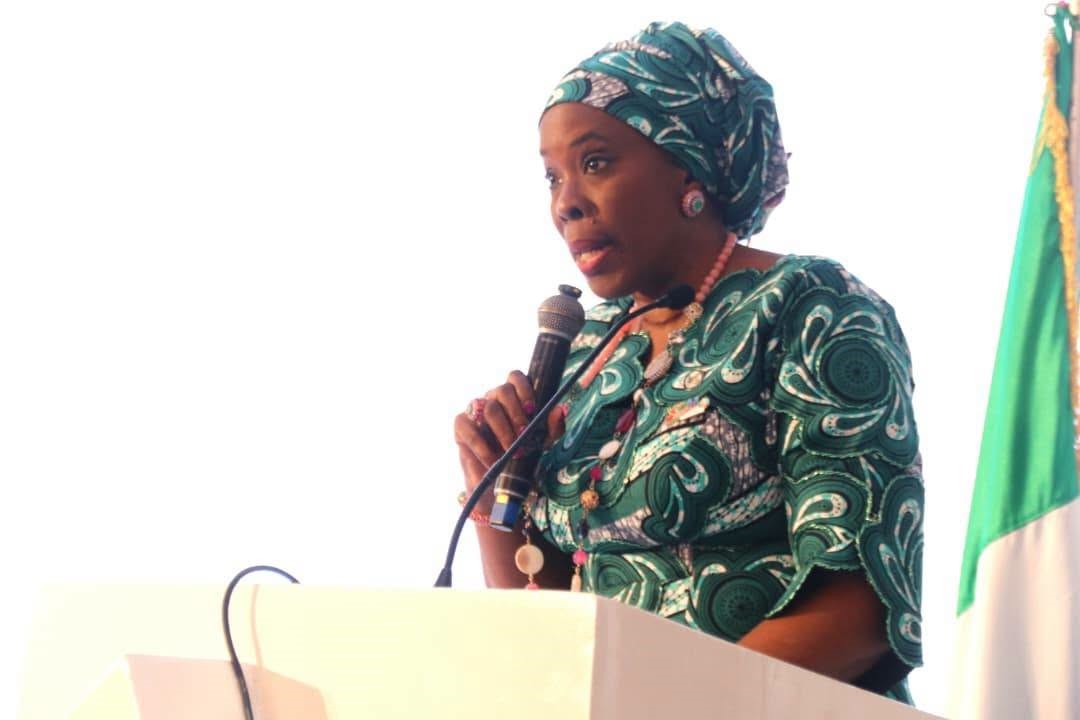
In a bid for sustained Industrial Growth and to Position Lagos as Africa’s Premier Industrial Hub, the Honourable Commissioner for Commerce, Cooperatives, Trade and Investment, Hon. Folashade Bada Ambrose-Medebem, has reaffirmed the Lagos State Government’s commitment to creating an enabling environment for Manufacturing, Investment, and sustainable Economic Development.
The Commissioner gave the assurance while delivering a goodwill address at the 54th Annual General Meeting of the Manufacturers Association of Nigeria (MAN), held at the Lagos Oriental Hotel, themed: “Leveraging National Industrial Policy to Position Nigeria as Africa’s Industrial Hub.”
Speaking at the event, she acknowledged MAN’s critical role in shaping policy and advancing Nigeria’s productive capacity over the past five decades, noting that Manufacturing remains fundamental to a modern, resilient Economy.
“Manufacturers face significant pressures, including exchange-rate volatility, inflation, high energy costs, infrastructure gaps, and changing trade conditions. Responding effectively requires sustained collaboration between Government and Industry; Government must create the conditions for businesses to grow, while Industry brings the Investment, Expertise, and practical insight needed to shape workable solutions.” Mrs. Ambrose-Medebem stated.
While reflecting on the impact of the Lagos State Industrial Policy 2025–2030, the Commissioner outlined the State’s strategic framework to one which strengthens manufacturing, promotes innovation, supports industrial clusters, and encourages sustainable growth.
She averred that strategic assets such as the Lekki Deep Sea Port and Lekki Free Trade Zone were key drivers expanding the State’s potential as a hub for Trade, Logistics, and Industrial investment.
Still speaking, the Commissioner detailed the Lagos State Electricity Law 2024, which established the framework for Lagos to manage its intrastate electricity market, explaining that the law provides for key institutions with distinct responsibilities, including the Lagos State Electricity Regulatory Commission (LASERC), the Lagos State Electrification Agency (LSEA), and the Lagos State Independent System Operator (LAISO).
“For manufacturers, this work is directly connected to competitiveness. More reliable power can help businesses manage costs, sustain production, protect jobs, and plan for growth. Lagos will continue working with MAN, Energy providers, and other Stakeholders to ensure that our electricity reforms translate into practical improvements for industry and residents”, she assured me.
Ambrose-Medebem applauded Otunba Meshioye for his dedicated service and leadership, extending the appreciation of His Excellency, the Executive Governor of Lagos State, Mr. Babajide Olusola Sanwo-Olu, and the good people of Lagos State.
In his remarks as the keynote speaker, the Director-General of the National Institute for Policy and Strategic Studies (NIPSS), Prof. Ayo Omotayo, emphasised that Nigeria cannot achieve a $1 trillion Economy if Manufacturing continues to contribute only 3.3 per cent (3.3%) to GDP instead of the 25 per cent (25%) envisaged.
“If Nigeria is going to work, economically, Manufacturing must work,” Omotayo said. “Going forward, it is not Policy that will make Manufacturing work. Policy has its own role, but eventually, it is how we approach implementation of Policy that will make the difference.”
Also speaking, the President of MAN, Otunba Francis Meshioye, OFR, expressed that positioning Nigeria as Africa’s Industrial hub requires more than expanding Domestic Production volumes. He called for an operating environment that enables firms to produce competitively, deepen Local Value Addition, and access markets within Africa and beyond.
“Market access will be commercially meaningful only where Nigerian Manufacturers can compete on cost, quality, standards, reliability, and delivery,” Meshioye said.