
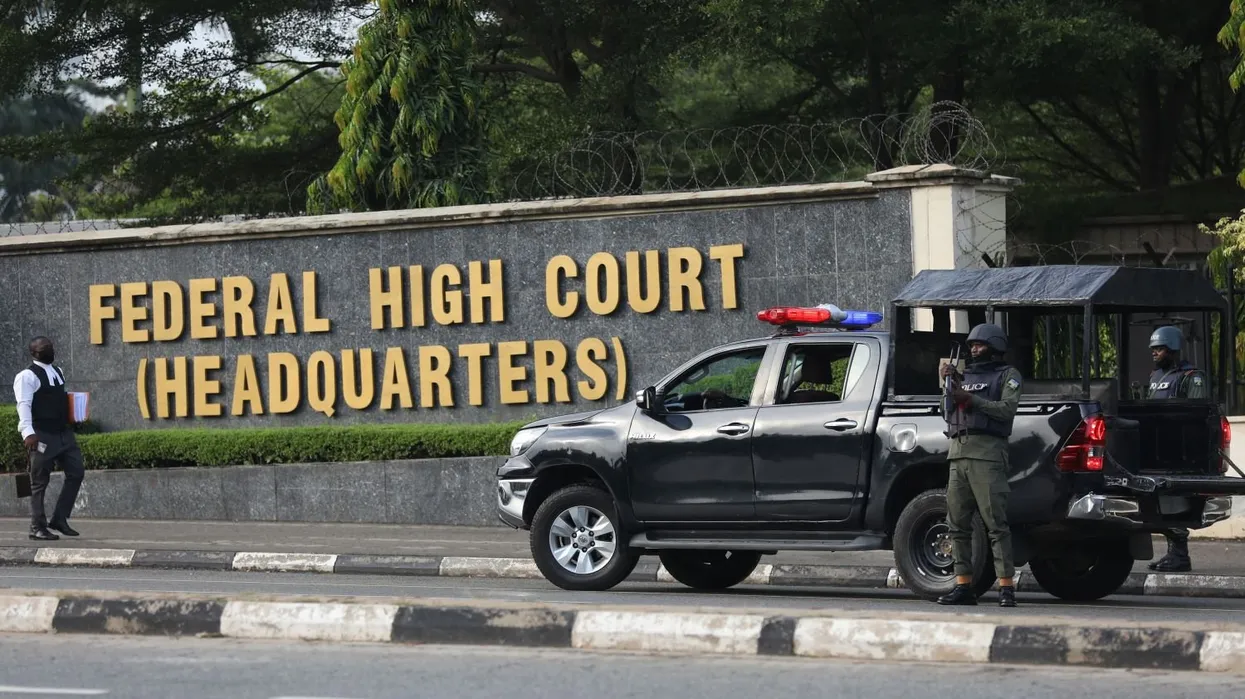

BY ADEKOLA BOLUWAJI NIFEMI
Justice is the cornerstone of any civilised society. It ensures fairness, accountability, and the protection of rights. In Nigeria, however, the consistent suppression of justice has become a pervasive problem, undermining democracy, weakening institutions, and eroding citizens’ trust in the legal system. Despite constitutional guarantees and democratic frameworks, powerful individuals, institutions, and state actors frequently manipulate, delay, or outright deny justice—especially for the poor, the marginalised, and political opponents.
This article examines the suppression of justice in Nigeria, the mechanisms employed to achieve this, its consequences, and what can be done to restore faith in the justice system.
What is Suppression of Justice?
Suppression of justice refers to deliberate actions or systemic failures that prevent the fair, timely, and impartial delivery of legal outcomes. It includes the obstruction, delay, distortion, or denial of justice, often for personal, political, or financial gain.
Forms and Mechanisms of Justice Suppression in Nigeria
1. Political Interference in the Judiciary
One of the most damaging forms of justice suppression is political interference. Executive powers—especially at the federal and state levels—frequently influence judicial appointments, decisions, and court processes.
•Examples: Politicians charged with corruption or electoral malpractice are often acquitted due to backroom deals or intimidation of judicial officers.
•Electoral tribunals often face enormous pressure, with outcomes favoring the ruling party regardless of evidence.
2. Delays in Judicial Processes
Nigeria’s judicial system is plagued by inordinate delays. Cases can drag on for 5–15 years due to adjournments, bureaucratic inefficiency, and overloaded dockets.
•Many suspects spend years in pre-trial detention, with some eventually proven innocent.
•Justice delayed is justice denied—especially for victims of human rights violations and displaced communities.
3. Corruption within the Legal System
Bribery, influence-peddling, and abuse of office are rife within Nigeria’s judiciary and legal institutions. Judges, court clerks, police, and prosecutors are often susceptible to financial inducements.
•Cases are sometimes “sold” to the highest bidder.
•Powerful defendants hire influential lawyers to delay trials, manipulate evidence, or tamper with witnesses.
4. Selective Prosecution
Law enforcement agencies such as the EFCC and ICPC are sometimes accused of pursuing anti-corruption cases selectively—targeting political opponents while shielding allies of those in power.
•This weaponization of the justice system undermines the principle of equality before the law.
5. Abuse of Security and Law Enforcement Agencies
Security agencies often act beyond their legal bounds by detaining critics, journalists, and protesters without due process.
•The illegal detention of #EndSARS protesters, and journalists like Omoyele Sowore, reveals the use of state power to silence dissent and suppress legitimate legal claims.
6. Denial of Access to Justice
A large segment of Nigeria’s population cannot afford legal representation or access the courts. Poor Nigerians—especially in rural areas—are often unaware of their rights or lack the means to enforce them.
•Legal aid schemes are poorly funded.
•Courts are concentrated in urban centers, far from rural populations.
7. Military Tribunals and Secret Trials
In cases involving national security, terrorism, or high-profile political figures, the government often conducts secret trials, denying the public transparency and the defendants basic rights.
•This undermines fair trial standards and breeds impunity.
⸻
Consequences of Justice Suppression
1. Erosion of Public Confidence
When people see that justice is reserved for the rich and powerful, trust in the system breaks down. Citizens turn to mob justice, vigilantism, or ethnic militias for protection.
2. Increased Impunity
When officials and elites know they can suppress legal outcomes, they act with impunity. This fosters more corruption, police brutality, election rigging, and human rights violations.
3. Stifling of Democracy
Justice suppression undermines the principle of accountability, a key pillar of democracy. It discourages political participation and opposition, enabling authoritarianism.
4. Worsening Insecurity
Failure to prosecute criminals—bandits, terrorists, kidnappers—creates a cycle of violence. Victims receive no closure, and perpetrators feel emboldened.
5. Economic Decline
Businesses and investors rely on enforceable contracts and a fair legal system. Where justice is unpredictable or for sale, investment is discouraged, and the economy suffers.
⸻
Real-Life Examples of Justice Suppression
•#EndSARS Movement (2020): Peaceful protesters were met with violence and arbitrary arrests. Investigative panels set up after the protests largely failed to prosecute officers involved in abuses.
•Corruption Trials of Politicians: Several former governors and ministers accused of stealing billions walk free, often after political realignments or plea bargains that return a fraction of the stolen funds.
•Shia Leader Ibrahim El-Zakzaky: Despite multiple court orders for his release, he was held in detention for years—highlighting executive disregard for judicial decisions.
⸻
Institutional and Structural Factors
•Weak Judicial Independence
•Inadequate Funding of Courts and Legal Aid
•Lack of Judicial Accountability
•Political Control of Law Enforcement
•Weak Civil Society Engagement in Legal Oversight
⸻
Pathways to Reform
1. Strengthen Judicial Independence
•Ensure full financial autonomy for the judiciary.
•Depoliticize judicial appointments through transparent and merit-based selection processes.
2. Judicial Accountability
•Strengthen the powers and transparency of the National Judicial Council (NJC).
•Set up independent judicial ombudsmen to investigate complaints.
3. Access to Justice
•Expand and properly fund legal aid programs, especially in rural areas.
•Support pro bono work by private law firms and NGOs.
4. Digitization and Court Reforms
•Introduce case management systems, e-filing, and real-time public case tracking to reduce delays and increase transparency.
5. Civic Education and Media Freedom
•Educate citizens about their legal rights.
•Protect investigative journalists and whistleblowers who expose injustice.
6. Enforce Compliance with Court Orders
•The executive and law enforcement agencies must comply with all court rulings, regardless of political implications.
⸻
Conclusion
The suppression of justice in Nigeria is not merely a legal failure—it is a national crisis that touches every part of society. It denies victims their rights, protects the corrupt, fuels insecurity, and sabotages democracy. Though the road to reform is long and difficult, it is essential to the future of Nigeria. A nation where justice is consistently denied cannot know peace, stability, or true progress. The time to act is now—before the silence of justice becomes the death knell of democracy.
⸻
Would you like this article restructured for a policy brief, editorial column, or academic paper with citations and references?
[8:39 AM, 7/30/2025] Bolu FCMB: Title: The EFCC’s Failure on Yahaya Bello: A Damning Indictment of Nigeria’s Anti-Corruption War
The Economic and Financial Crimes Commission (EFCC), once regarded as Nigeria’s flagship anti-corruption agency, has in recent years suffered a credibility crisis. Nowhere is this more evident than in its handling of the high-profile corruption case involving Yahaya Bello, the former Governor of Kogi State. The EFCC’s inability—or unwillingness—to bring Bello to justice is not merely a failure of law enforcement; it is a glaring indictment of the institutional decay, political compromise, and selective accountability that continue to undermine Nigeria’s anti-corruption efforts.
The Yahaya Bello Case: A Snapshot of Alleged Loot
Yahaya Bello, who governed Kogi State from 2016 to 2024, has been linked to staggering allegations of corruption. According to the EFCC, Bello is accused of embezzling over ₦80 billion during his tenure—funds meant for salaries, infrastructure, healthcare, and public services in one of Nigeria’s poorest states.
In April 2024, the EFCC issued a warrant for his arrest, charging him with money laundering and criminal misappropriation. Yet more than a year later, Bello has not been successfully arrested or prosecuted. He has not even appeared in court. Instead, the former governor has seemingly mocked the judicial process, protected by a maze of legal technicalities, political cover, and institutional reluctance.
Institutional Paralysis and Compromise
The EFCC’s failure to secure Bello’s arrest is not just about legal roadblocks—it reflects a deeper institutional paralysis. Multiple attempts by the commission to detain or question Bello have been thwarted by a combination of political interference, last-minute court injunctions, and, disturbingly, the protection of law enforcement personnel loyal to him. In one particularly shocking episode, Bello was allegedly shielded from arrest by state security operatives, turning what should have been a standard law enforcement action into a national farce.
This pattern of obstruction raises serious questions: If the EFCC cannot bring a former governor to justice in a high-profile, well-documented case, what hope is there for accountability at lower levels of government?
Political Interference and the Culture of Impunity
The Yahaya Bello case has exposed the deeply politicized nature of Nigeria’s anti-corruption architecture. While the EFCC was envisioned as an independent agency, successive administrations have turned it into a tool of political convenience. Individuals outside the ruling party or in political disfavor are swiftly prosecuted. But allies and insiders—like Bello, a key figure in the APC’s internal machinery—often enjoy immunity in practice, if not in law.
The fact that Bello remains a free man, with full media access and political relevance, sends a chilling message: that corruption in Nigeria is not a crime unless you fall out of favor. This two-tiered system of justice not only undermines the rule of law but also erodes public faith in the entire anti-corruption agenda.
The Judiciary: A Willing Accomplice?
The judiciary, which should serve as a check against executive overreach and ensure legal accountability, has also played a troubling role. Bello and his legal team have secured multiple injunctions preventing his arrest—some granted under questionable circumstances. These court orders, often issued at lightning speed and under murky justifications, suggest a judiciary vulnerable to manipulation or intimidation.
This abuse of legal processes—known as “injunction shopping”—is a tactic frequently used by powerful elites to stall justice. And in Bello’s case, it has worked with stunning efficiency.
What This Means for Nigeria’s Future
The EFCC’s handling of the Yahaya Bello case symbolizes a broader collapse of accountability in Nigeria. The failure to prosecute such a high-profile suspect:
•Weakens the credibility of anti-corruption institutions,
•Emboldens other corrupt public officials, and
•Reinforces the belief that political power grants immunity from prosecution.
For a country whose resources are routinely plundered while millions live in poverty, this kind of elite protectionism is not just unethical—it is catastrophic.
Conclusion: A Moment of Reckoning
The EFCC’s failure to hold Yahaya Bello accountable is more than a personal scandal. It is a systemic failure that speaks to the heart of Nigeria’s governance crisis. Until there is real political will to support institutional independence, eliminate legal impunity, and prioritize justice over patronage, the country’s anti-corruption war will remain a hollow slogan.
The time has come for Nigerians to demand more: from their leaders, from their courts, and agencies like the EFCC. Because until corruption truly has consequences—regardless of party, position, or power—the nation will remain trapped in a vicious cycle of theft, denial, and decay.